Why a Public Ceremony Needs a Sequence
A public ceremony sequence helps people know when to watch, join in or move on, with clear cues that make civic gatherings easier to follow.
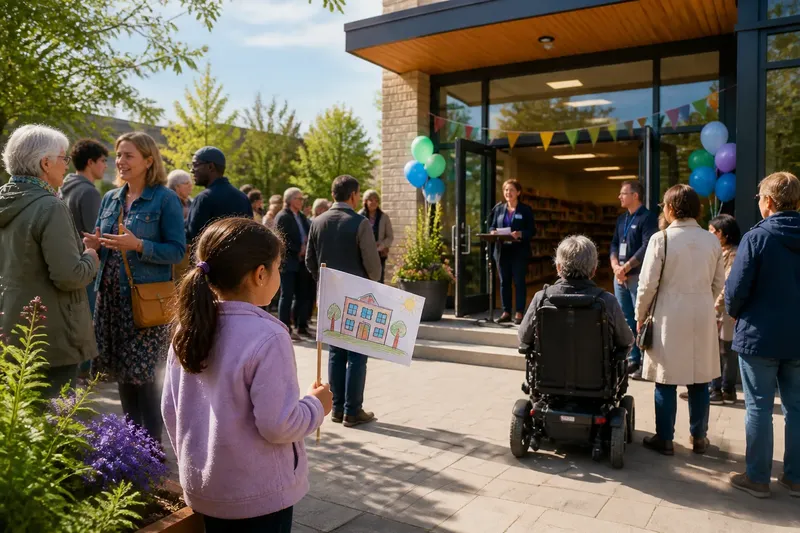
At a library reopening, a child holds a paper flag while neighbours gather by the entrance. Some look towards the speaker; others keep chatting, unsure whether the event has begun. A clear public ceremony sequence gives everyone cues for when to watch, join in or move on, without requiring every gathering to follow the same script.
The point is not to make a civic occasion stiff. A sequence is like a path through a park: it offers direction while leaving room for people to find their own pace. Organisers can make the order legible and welcoming by planning a few simple transitions.
Give the gathering a recognisable beginning
People need a signal that ordinary conversation is giving way to shared attention. It might be a bell, a host stepping to a visible spot, a short piece of music or a spoken welcome. Choose a cue that suits the place and the group rather than borrowing ceremony for its own sake.
Make the signal easy to notice from the edges. If the host speaks while facing only the front row, late arrivals may not realise anything has changed. A brief pause before the first remarks gives people time to turn towards the event without being scolded for arriving mid-conversation.
Let each gesture prepare the next
A sequence feels understandable when one part gives a reason for the part that follows. A welcome can explain why everyone has gathered; a reading or shared reflection can give the occasion meaning; a closing cue can release the group. Not every ceremony needs all three. The transitions simply need to make sense to someone who has not seen the plan.
Imagine a neighbourhood group opening a community garden. The host welcomes visitors and explains the garden’s shared purpose. A volunteer then invites everyone to add a handful of compost to a prepared bed. The host thanks the group and opens the space for informal conversation. Visitors can follow the shift from welcome to participation, then see that the organised activity has ended.
Make watching and joining equally clear
Not every moment asks everyone to do the same thing. A moment of silence may invite stillness, while placing a flower, signing a book or singing a refrain calls for a visible action. Tell people what is coming before the cue arrives. “You’re welcome to add a flower after the reading” gives participants and observers a comfortable choice.
Make the invitation concrete. If people are meant to move, indicate where they can go and what they can do there. If watching is also a respectful way to take part, say so. A ceremony should not turn uncertainty into a test of who already knows the local rules.
Allow for movement and different ways to take part
Transitions take longer when a group must cross a room, approach a memorial or pass through a narrow entrance. Leave a pause for movement instead of filling every gap with announcements. Keep a clear route for people using mobility aids, and consider whether someone can remain in place and still take part in the shared moment.
Small adjustments can preserve the shape of an occasion without requiring identical participation. A spoken response can have a printed version; a procession can include a stationary role at its destination; a song can be introduced as an invitation rather than an obligation. Make the available choices clear before people have to act.
Use repetition to help people recognise a cue
A repeated gesture can orient a group, especially when the occasion is unfamiliar. The same short phrase before a communal action, or a familiar signal at the start and close, can show that a transition is happening. Repetition works best when it carries meaning rather than merely adding ceremony.
Local custom matters. A gesture that feels welcoming to one community may feel out of place in another, and a civic gathering may include people with different beliefs or none. Ask people who use the space what feels fitting. Keep any shared gesture simple enough for newcomers to follow without a private explanation.
End with a cue that releases the group
When a ceremony has no recognisable ending, people may linger because they cannot tell whether they are meant to stay. A final thank-you, closing phrase, musical cue or invitation to move to refreshments can make the change clear. If the event continues informally, distinguish that next part from the formal portion.
Give the closing the same care as the opening. People may need to collect children, return borrowed items or leave quietly. A clear release lets them do so without appearing to interrupt, while those who want to talk can see where the gathering continues.
What should organisers decide before the ceremony?
How formal should the order feel?
Match the sequence to the purpose and the people present. A short welcome and clear closing may suit a casual civic event, while a remembrance gathering may call for a quieter pace and more deliberate transitions.
How can late arrivals understand what is happening?
Use visible cues and brief explanations at important transitions. A host can quietly point newcomers towards a place to stand or tell them what action is under way without restarting the event.
What if participants do not want to join a gesture?
Offer a respectful way to observe, and explain that choice before the gesture begins. Participation can include attentive presence; it need not require everyone to speak, move or make a public display.
Who should review the sequence?
Ask people who know the community and the venue, including those likely to encounter access barriers. They may spot a confusing cue or awkward transition before the day itself.
A good public ceremony sequence does not make every gathering alike. It helps a particular group recognise the shape of its occasion: when attention gathers, how people may contribute and when they are free to go. Clear cues leave room for the most important local detail—the way people choose to meet one another.