A Bench Is Not the Whole Public Space
Read a public space beyond its benches: notice paths, edges and informal places to pause to see how visitors can rest, wait and move comfortably.
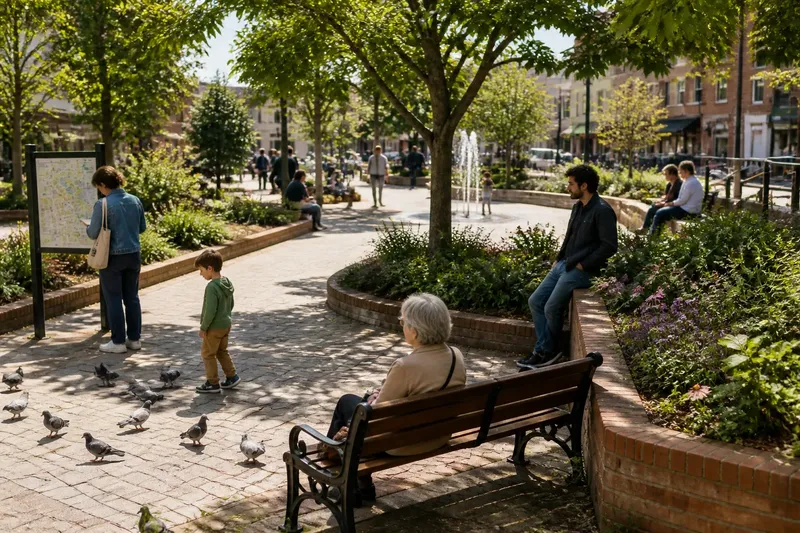
At the corner of a neighbourhood square, one person rests on a bench while another leans against a low brick planter. A child stops to watch pigeons near the path; someone pauses at the map board, bag in hand. To understand how a public space is shared, look beyond its benches: paths, edges and everyday stopping places show who can pause without getting in someone else’s way.
A bench makes sitting visible and expected, but counting seats tells only part of the story. The route to a seat, a patch of shade, a backrest or a clear place to wait can matter just as much. Think of a square as a coat with several pockets: each offers a different way to carry something, and none suits every need.
Benches make one kind of welcome visible
A bench signals that sitting is welcome, not a private favour or an interruption to movement. Its position shapes the invitation. Seats facing one another can encourage conversation; a bench looking towards a garden or play area lets someone stay close to activity without joining in.
But a bench is not a universal answer. Some visitors prefer to sit beside a companion rather than face strangers. Others may need a backrest, room alongside for a mobility aid, or a position close to the activity they are watching. A seat in full sun may suit one moment and feel uncomfortable at another.
Notice what the seat asks of a visitor. Can someone approach without stepping into a cycle route? Is there room to sit beside a companion? Does the bench face a useful view, or a blank wall? These are observations about how the place works, not a verdict based on furniture alone.
Paths reveal where stopping fits
A path is more than empty space between destinations. Its width, bends and meeting points affect whether a brief stop feels easy or obstructive. A wider route may let someone wait beside a companion while others pass; a narrow pinch point can turn the same pause into sidestepping and apologies.
Notice where routes change direction or meet a fountain, noticeboard or entrance. People may slow there even when no formal seat marks the spot. If the only comfortable place to wait lies in the main flow, the problem may be the layout rather than a shortage of benches.
For a grounded observation, stand somewhere that does not obstruct others. Note where people slow, turn or step aside to let someone pass. One visit is only a snapshot: a school-run crowd, a quiet morning and a market day can use the same route differently.
Edges create informal places to stay
Low walls, planter rims, broad steps and railings can offer places to rest or watch. They are not interchangeable with a well-designed seat. A narrow ledge may be hard to use; a hard surface may feel cold; a railing may support a brief lean but not a longer rest. Still, these edges can give people another way to pause.
Look at what an edge faces and how it relates to nearby activity. A planter rim beside a path may let someone watch a game while staying out of the way. Steps can offer a perch for a small group, but they can also become a barrier if they are the only route between levels.
Materials have practical effects. A smooth stone edge may be easy to wipe but slippery when wet; a timber ledge may feel warmer but need care. Observe the surface in the conditions at hand, and check whether another place to pause is available.
Shade and outlook shape a comfortable pause
A seat can be present and still feel difficult to use if it is exposed, noisy or turned away from what visitors came to see. Trees, awnings and building shadows make different parts of a square appealing at different times. Someone waiting for a friend may choose shade; someone watching a child may favour a clear view of the play area.
Notice how shelter relates to movement. A tree canopy beside a path may create a comfortable stopping place without a built seat. A sheltered doorway may draw people waiting out of the rain, although it may serve a building with a separate purpose. Record the pattern without assuming that every informal perch suits every visitor.
Imagine a small square with two benches facing a busy road and a shaded planter beside a quieter footpath. A caretaker begins by noting the view, shade and passing route at different times of day. The resulting notes describe what is visible around the planter; they do not establish why each person chooses it or prove that another bench would meet their needs.
How can you tell whether a place makes pausing possible?
What counts as a place to pause?
It might be a seat, a broad step, a sheltered corner or clear space beside a path where someone can wait briefly. The practical question is whether stopping is possible without blocking movement or requiring a purchase.
Should every edge become seating?
No. An edge may help someone lean or watch, but its surface and position can make sitting difficult or unsuitable. Keep several ways of resting in view rather than treating every ledge as a substitute bench.
How can you notice who may be left out?
Describe what you can see without guessing at people’s circumstances. Check whether the route is clear, whether there is a choice of places to pause, and whether someone can stop beside a companion or mobility aid.
When is a bench still the right choice?
A bench can be valuable where people need a stable, recognisable place to sit and no comfortable alternative exists. It can meet that need while other parts of the space still deserve attention.
Record what each stopping place allows
A useful field note can be short and specific. Record where someone pauses in relation to the path, what the spot faces, whether it is shaded and whether others can pass comfortably. Avoid assigning motives from a glance: “two people waited beside the noticeboard” is more grounded than “they preferred the edge”.
- Route: Observe whether passers-by can get around someone who has stopped. If they pass comfortably, note the route as clear; if they squeeze or step into another route, record the pinch point and consider whether a different stopping spot is needed.
- Choice: Check whether there is more than one place to pause, such as a seat and an open edge. If both are available, note the choice; if only one option exists, identify what kind of alternative is missing.
- Position: Observe whether the stopping place faces activity, a view or a busy flow of movement. If it offers a useful outlook away from traffic, record that; if it faces a blank wall or moving crowd, note whether repositioning or another spot would help.
- Access: Check whether the approach is clear and whether someone can stop alongside a companion or mobility aid. If space is available, note it; if an obstacle blocks the approach, record the obstacle and consider a clearer route.
- Conditions: Observe shade, shelter and the condition of the surface during the visit. If the spot offers comfortable cover and a usable surface, record those features; if it is exposed or slippery, note the condition and look for another suitable place.
- Timing: Compare the same location under a different pattern of use. If the route remains easy to share, note that it works across both visits; if crowding changes the picture, record when the pinch point occurs before drawing a broader conclusion.
Say a caretaker is considering where to suggest a new resting place. The starting observations are two benches facing a busy road, a shaded planter beside a footpath, and people waiting near the planter; the notes also show that passers-by can get around it during a quiet visit. The caretaker checks the same spots during a busier period and sees that the footpath then becomes crowded, so the planter is no longer a clear place to stop. The resulting decision is to discuss a resting place beside, rather than within, the footpath and to consider the view and shade alongside access. This does not settle the design, but it makes the trade-off visible: comfort matters, and so does keeping the route clear.
A shared space offers more than a seat
Read a public space through the choices it provides: to sit, lean, wait, watch, move through or remain near another person. A careful account neither romanticises informal edges nor dismisses formal seating. It notices how each feature fits into the whole arrangement.
Next time you cross a square, notice one pause that happens away from a bench. Ask what makes it possible and what might make it awkward. Looking beyond the benches is useful because it turns a broad complaint into a specific question about comfort, access and movement—and gives neighbours a clearer place to begin their conversation.